Ask me aboutsix-figure events
I help coaches and consultants get more yeses at the events they run.
Webinars, masterclasses, workshops and live events. Every in-person event we have run, with rooms of 50 people or fewer, closed multiple six figures on day two. One of them had 42 people in the room, cost about $20,000 to $25,000 to host, and closed $350,000.
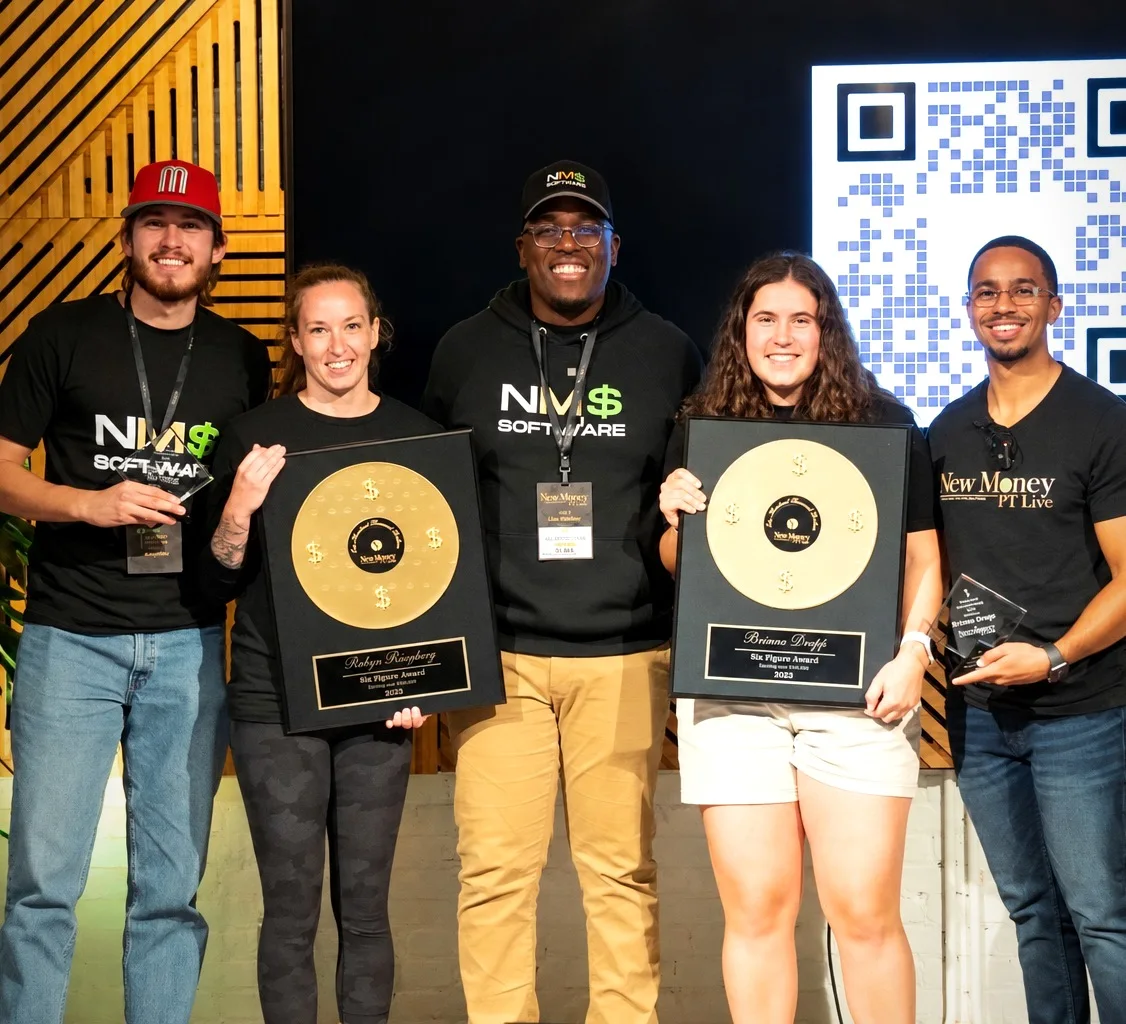
The room loved it. Nobody bought.
There is nothing more frustrating than being genuinely gifted at what you do. You know your craft. You teach it well. You serve people well. And at the webinars, the workshops, the events you have run, you gave everything you had and people were moved. Real value. Real transformation in that room.
Then you made the offer, and almost nobody bought.
You did the work. You ran the event. The room was warm, people told you it was amazing, and you walked away with no idea why.
That is exactly who I am talking to.
It is not that you did not try hard enough. You have done the trainings. You have an offer that has already sold to real people. You were in your genius, doing the exact thing you are great at, and it still did not convert. That is what makes it so confusing. You cannot blame effort and you cannot blame fit, so the only explanation left is that something is wrong with you.
There isn't. You are the talent. You are the reason anybody registered in the first place. Moving a room from moved to decided is a different job, and almost nobody has ever been taught it.
And you probably think you are the only one.
Everybody posts the photo of the full room. Everybody posts the testimonial. Nobody posts the silence after the pitch. Hosts get praised for packed rooms and glowing feedback. Nobody claps for conversion rate.
So a whole industry of gifted people is carrying the same thing, each one assuming it is only them.
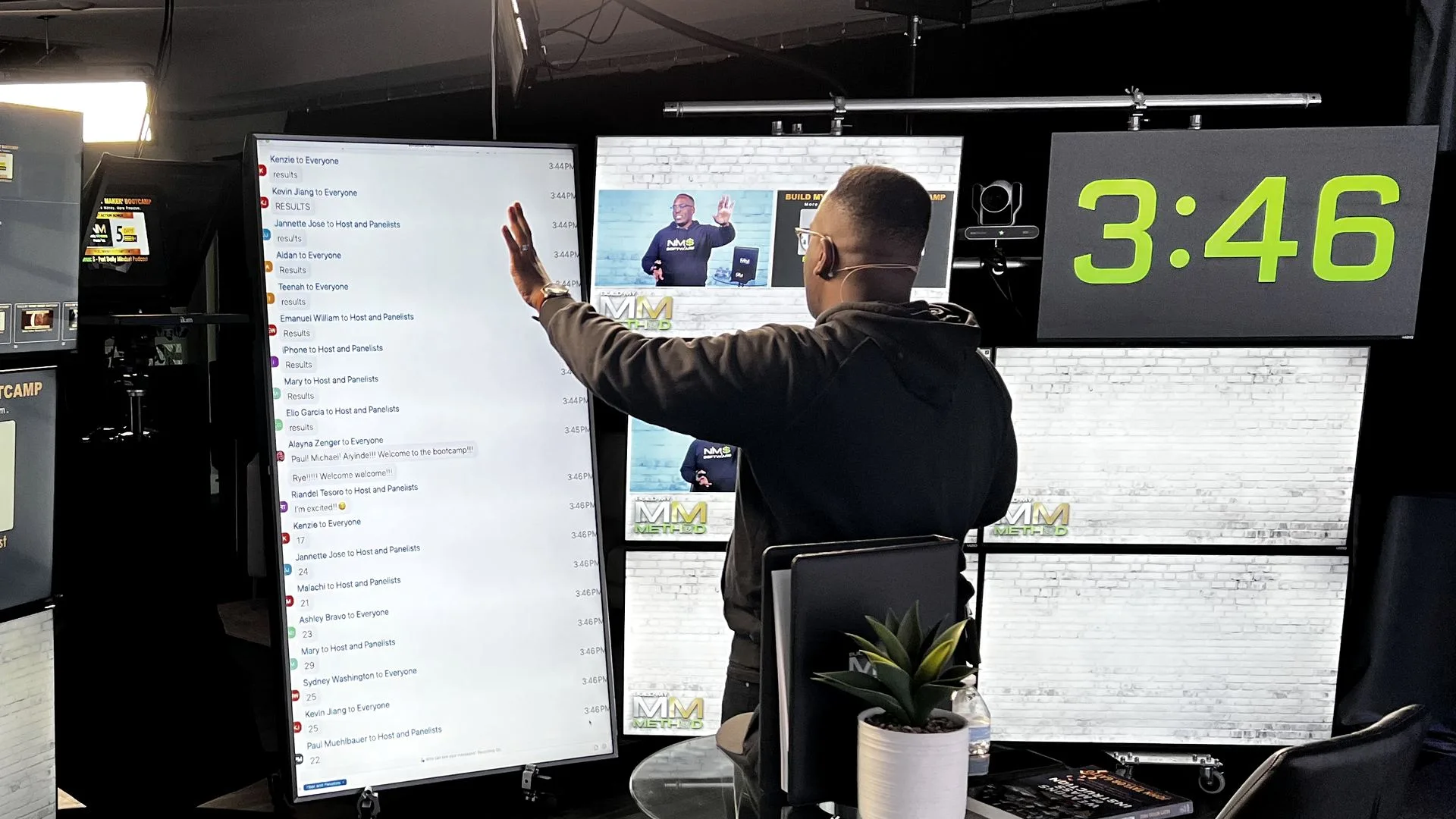
Most events cost more than they make
Almost every event being run today needs a tremendous amount of leads and a tremendous amount of attendees just to work. And most of them, live events and virtual events both, end up costing more than they bring in.
So people start to decide that events don't work. Webinars don't work. Masterclasses don't work. Workshops don't work.
That isn't true. They just don't understand how to get them to convert.
And let me say the quiet part, because I think it is what makes people squeamish. Everybody running an event is doing it as part of their business model. Yes, they are trying to serve. But it is also how they serve, earn trust, find the people who need help with the problem they solve, and then present an offer. There is nothing dirty about that. When it is done well it works. When it is done wrong it can bleed a company out, because there is a lot of money that goes into running an event.
The format was never the problem. Almost every time I go through somebody's event, there are three or four specific places where people are leaving, and nobody has ever looked.
people in the room. We have run multiple in person events with fewer than that.
Every one of them closed multiple six figures on day two
If the size of the room was what decided it, that should not be possible. It works the same way at 500, but at 50 there is nowhere to hide. Volume cannot cover a single mistake.
So what if the yes was already decided, long before anybody was asked to buy?
One of ours.
An event is a series of dominoes
Everything in it is a series of dominoes intentionally falling into place, so that when the offer is presented it feels like a natural domino falling from the start of the event right up until that moment.
It feels so aligned that attendees feel like it's the only logical next best step. They'd feel silly saying no to it. That's how you want it to feel, because of how it's positioned, and it creates very little resistance.
The yes is the last domino, and it is the biggest one in the row. It falls because everything before it fell first, in order.
Same eleven dominoes. Every room.
A one-on-one sales call, a webinar, a challenge, a virtual event, a live event. The format changes how you knock them over. It doesn't change which ones need to fall. And underneath all eleven is how people have always decided: they feel seen, heard and understood, they trust you, and then they move.
Teaching more is what kills it
Most people make the same mistake with an event that they make on a sales call. They teach too much. Webinar, virtual event, in person event, it is the same error every time.
I used to think the gift people needed was all the steps.
The greatest gift you can ever give somebody is awareness.
If I don't know where I'm at, my actual situation, then it's very difficult for me to move from where I am. Throwing information at me isn't going to do a thing. If I'm lost and you give me random directions that worked for you or worked for somebody else, I'm still just as lost, only now I'm more overwhelmed.
It might temporarily feel like I got direction. But I leave with a bunch of notes and I do nothing with them.
This is hardest on the givers. If you're a helper by nature, teaching more feels like helping more, so when the event doesn't convert you conclude you didn't teach enough. Then you add more teaching next time and it converts worse.
What the events that convert do differently
Teach, then pitch
- Teach as hard as possible so the room leaves with a result
- Put the presentation together the week of the event
- Hand over the how, which lets all the pressure out
- Book whichever speakers happened to be available
- Ask once, at the very end, and hope
Build the decision
- Expose the gap first, and give it real room to be felt
- Build the event and the offer as one piece
- Give the what, not the how, so the pressure keeps building
- Place every speaker for the domino they are there to knock over
- Collect micro yeses from the first raised hand onward
Same audience, same offer, same person on camera.
Almost all of the gap is in the column on the right, and none of it requires a single extra attendee.
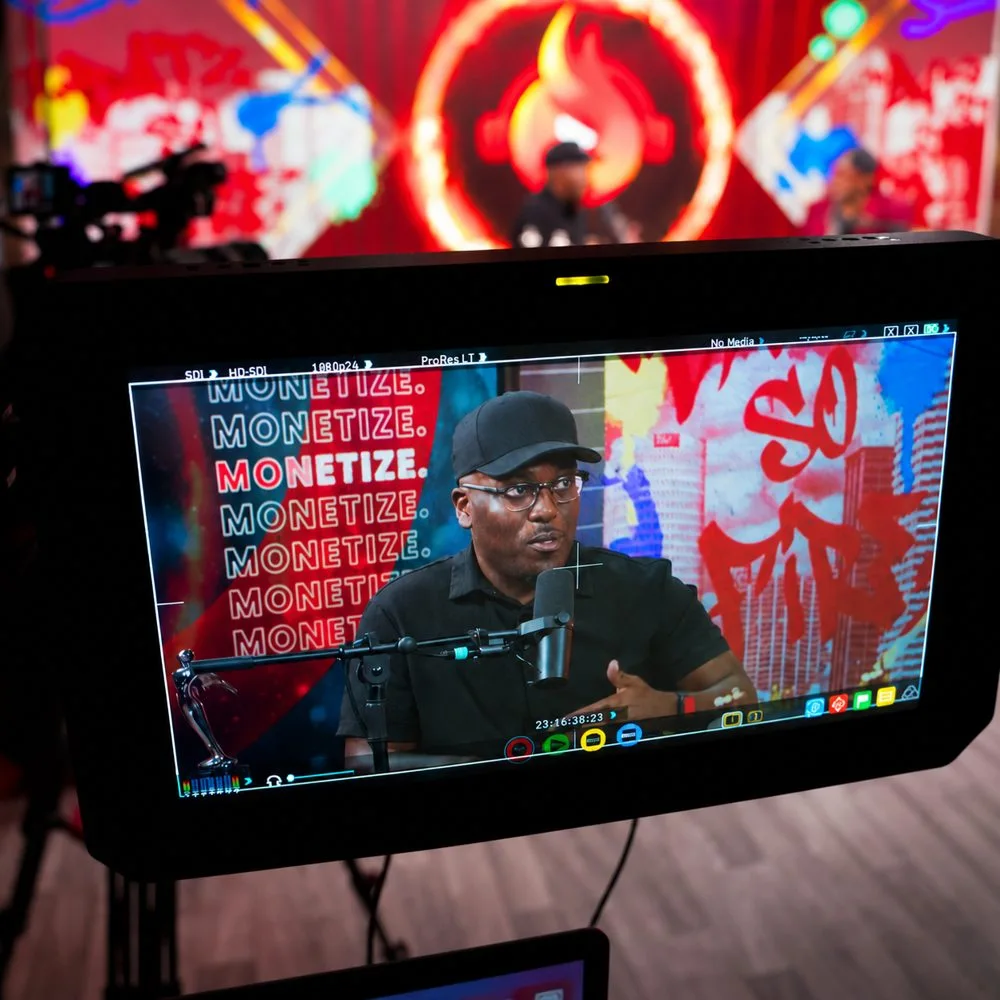
I didn't start with packed rooms. I started with a full-time job and webinars that barely sold.
Super Bowl Sunday, February 4, 2018. The physical therapy clinic was closed for the day, so I turned it into a studio. Laptop on a rolling desk, a stool from the clinic, nobody else in the building. I had spent nearly three weeks building that webinar, slide by slide. As a full-time clinician, one-to-many was the only leverage that made sense.
I gave it everything. When people pushed back, I gave more. By the end my voice was nearly gone and I had sweated through my shirt. When I moved into the offer, nearly half the room left. Then the comments came in: "Wow, this was so helpful. Thank you so much." I checked the bank. I checked the Stripe link. Zero.
That year, we made about $12,000. I got obsessed with one question: what actually helps someone make a decision? In May 2019, in a ballroom in Clearwater, I heard Myron Golden say that people do things for one reason and one reason alone, because they feel like it. And when someone asked why he's never nervous before an offer, he said he already knows what's going to happen. The people listening don't. I had been the nervous one in the room. I wanted that certainty.
It grew. $97K the next year. Then $250K. Then nearly half a million. Close to 90% of what we generated online came from webinars and events. Our in-person events, with 50 people or fewer, each closed multiple six figures on day two. At one of them, 42 people flew in. We invested about $20,000 to $25,000 to host it and closed $350,000, roughly $325,000 to $330,000 in the green. I thought that was normal. It isn't.
And right around then, I almost let it go. I started thinking maybe we just got lucky, and deferred to people I thought were more successful. My results started to fall. It took me a while to come back to what God had given me. I learned that strategy is only half of it. The other half is the Source.
That's why I care about this so much. I know what it feels like to be genuinely good at what you do and still walk away from an event wondering why nobody bought. For years I never talked about any of this publicly, because I assumed anybody past six figures had already figured it out. Turns out that is not true.
- Webinars since February 2018
- Virtual events since 2020
- In-person events since 2021
- Offers sold from $1K to $35K
- Rooms from 15 to 500+ attendees
- Author, Unlock Your Hidden Income
- Retired Doctor of Physical Therapy
Whether this is worth your time
You've run one before. A webinar, a masterclass, a workshop or a live event, and it didn't do what you hoped.
You have an audience. And an offer that has already sold to real people, more than once.
Your last live event cost more than it made. And you've been wondering whether to run another one at all.
You want the next year of events to double or triple what the last ones have done.
You want to stay in your genius. You're the talent and the face of it. My job is everything around you that decides whether the room says yes.
Not yet if you haven't built an audience, your offer hasn't sold to anybody, or you're looking for a template to copy. I'd rather tell you that in a DM than take your money.
Send me a DM and let's talk
If your last event had a warm room and almost no sales, I already know where to look. Tell me what it did, how many showed up, and how many bought. Even rough numbers are fine.
I'll tell you where I think the gap is. And if it looks like I can help, we'll set up a call.
No pitch. Worst case, you leave with a clearer picture of your own numbers.